
John Howell: Our Resident Poet
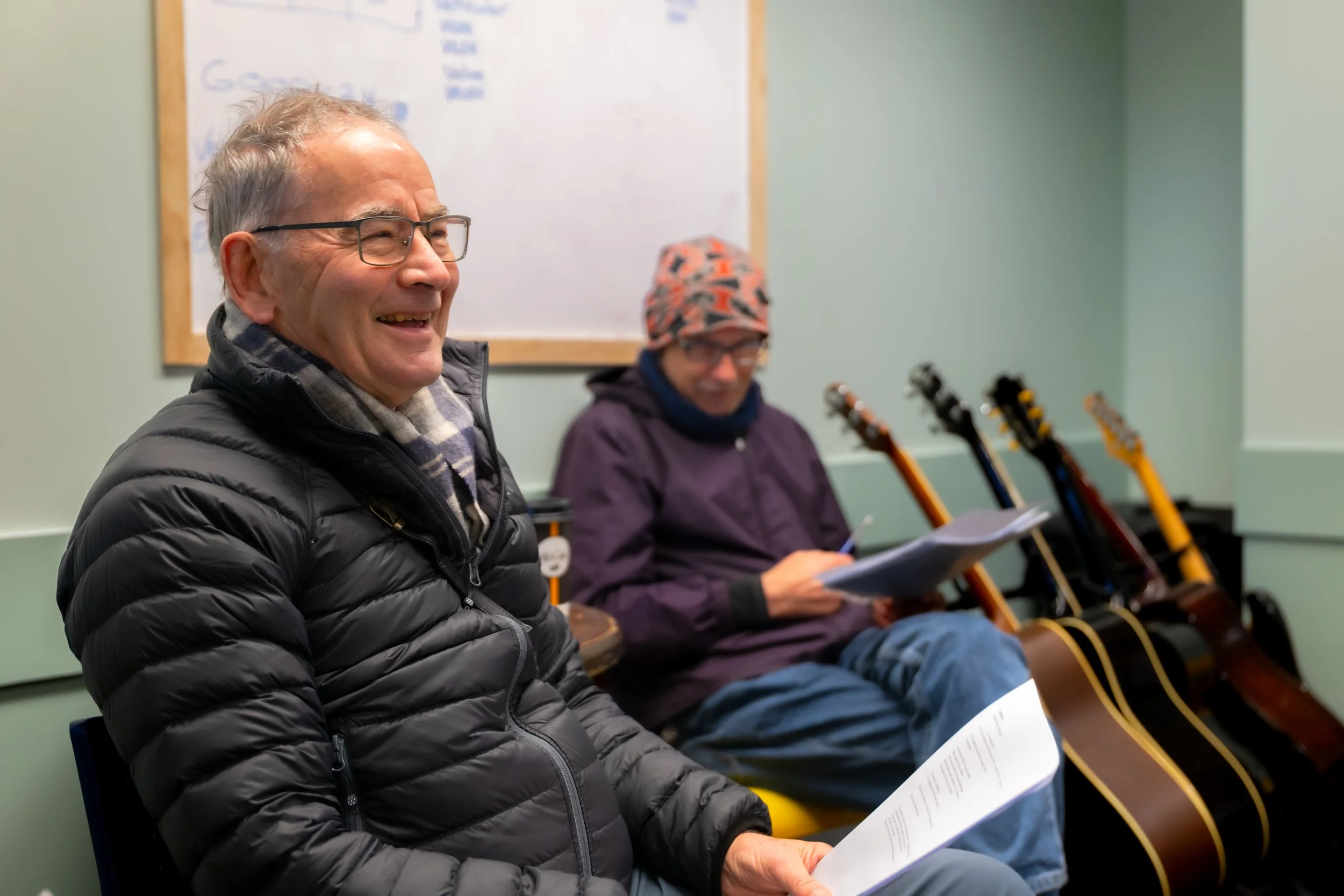
John in Te Hāpai
John Howell is a treasured person among our DCM community. A volunteer, a poet, and the kind of person who sees the world around him clearly; from the beauty of nature to the steep inequities in our society, John has a keen eye for it all. It’s no wonder that he is a poet.
‘If it’s well constructed it connects with something about the human condition.’
Hearing John talk about poetry makes you want to dig up a dusty book from your shelf and tuck in. Fondly referred to as ‘Poetry John’ around our whare, John has been running poetry sessions on our site since 2014. Well before this, in his younger days, John was a volunteer at ICM (we become DCM in 1989) meaning he has seen our organisation in many shapes and forms.
Our poetry circle doesn’t look like your average book club. Some weeks there is only one person, some weeks there are twelve or more. Some of the attendees may be on substances or experiencing severe mental illness. Most are without a house or have spent a significant portion of their life on the streets.
‘We’re dealing with people who are bruised… The great thing about it is they start to make changes and that’s where I think the poetry might be able to just give them a phrase or a line or an idea that helps them move from where they are.’
John has an amazing story from a few years back. He was holding his poetry circle and a whānau he didn’t know had joined in. John asked him where he was from, where his Marae was, and suddenly this person just opened up about his life.
‘There were three social workers in the room and they just sat there flabbergasted, ‘we didn’t know this about him?’
As well as reading poems from other authors John and the poetry group read their own work too. John, who is widely published, says that it’s a great way to get feedback on his work. Instant and very honest our whānau can be excellent critics! John, in turn, supports the writers in our community to tell their own stories:
‘There’s something quite therapeutic about that story being heard and to have that heard by other people who are in the same circumstances.’
Maybe even more important than sharing stories within a community is sharing stories between communities. The importance of ensuring that street whānau voices are heard loud and clear by those of us lucky enough to be in warm homes. Poetry is one of many tools for bridging the gaps between our diverse experiences and building empathy and action.
Ngā mihi nui for all you do, John.